Posti da Vedere / Places To See
Torricella Peligna
| Posti da Vedere | Places To See | |
| Chiesa Maggiore di S. Giacomo Apostolo
Edificata intorno all’anno mille. Al suo interno si possono ammirare calici e ostensorio in argento del 1700 e, in fondo alla navata centrale, una tela raffigurante S. Giacomo, opera della pittrice Tilli, allieva del grande artista abruzzese Francesco Paolo Michetti. |
|
Main Church of San Giacomo Apostolo (Saint James the Apostle) Built around the year 1,000. Inside one can admire silver chalices and monstrances (receptacles in which the host is held) from the 1700s, and in the nave, a painting of Saint James the Apostle by Tilli, a student of the great Abruzzese artist, Francesco Paolo Michetti. |
| Chiesa della Madonna delle Rose
Il santuario, costruito nel 1552 e situato nei dintorni di Torricella, è meta di pellegrinaggi il Lunedì di Pasqua e l'ultimo sabato di maggio. All'interno sono conservati un meraviglioso quadro di Cristo crocifisso e la statuetta della Madonna con Gesù Bambino definita miracolosa dai pellegrini. |
|
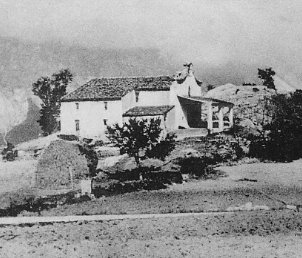
Church of Madonna delle Rose (Madonna of the Roses) On the outskirts of Torricella. A sanctuary built in 1552 and a pilgrimage destination on the Monday after Easter (a holiday in Italy) and the last Saturday of May. Inside there is a marvelous painting
of Christ on the Cross and a small statue of Mary with the Child Jesus, considered miraculous by pilgrims. |
|
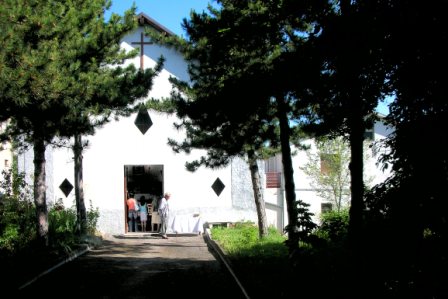
Si trova nel Rione S. Antonio. Durante la guerra, la chiesetta venne distrutta dai tedeschi. La nicchia che accoglieva la statua del Santo rimase miracolosamente intatta. L’incarico di ricostruzione della chiesetta fu dato al
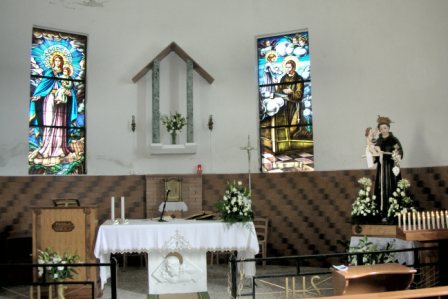
muratore Antonio Fedele, il Biondo; riuscì a completarla nel 1960. Ci sono 4 vetrate artistiche, raffiguranti gli evangelisti, e una vetrata posta in alto dietro l’altare, con simbologia pane e vino, realizzate tutte dall’artista Federico Tamburi.
Ci sono altre 2 vetrate, da tempo realizzate, poste ai lati dell’altare, raffiguranti la Madonna col Bambino e il Santo col Bambino.
|
|
Church of Sant’Antonio (Saint Anthony) Situated in the neighborhood of Sant’Antonio. During the war, the Germans destroyed the small church. The statue of Saint Anthony was in a niche that miraculously remained intact. The mason Antonio Fedele, il Biondo (the blonde one) was given the task of rebuilding the church; he finished it in 1960. There are 4 stained glass windows representing the Evangelists and one high up behind the altar symbolizing the bread and wine; these are all the creations of the artist Federico Tamburi. There are 2 others made time ago on the sides of the altar; they depict Saint Anthony and Mother Mary, both with Child Jesus.
|
|
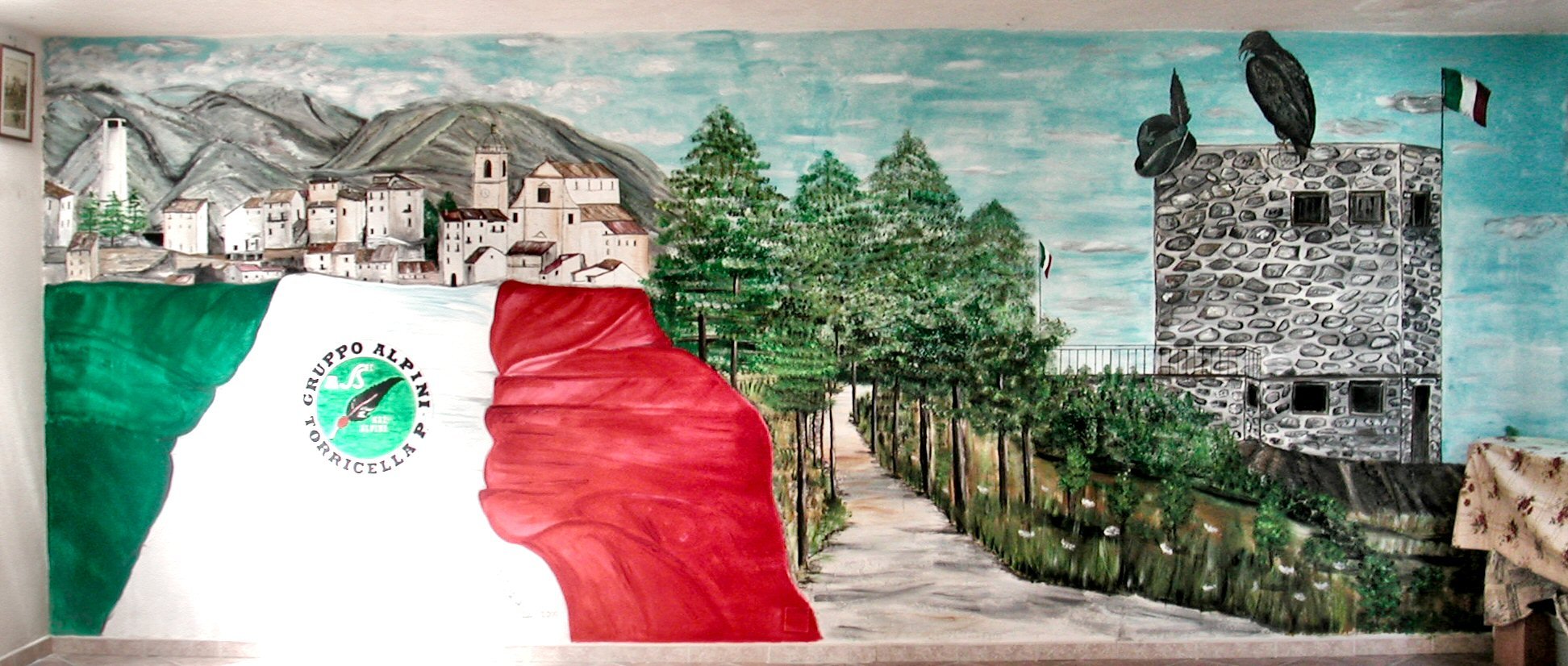
Si trova all’interno del Paese nei pressi della Pineta. La costruzione della Chiesetta fu ideata dal Gruppo Alpini di Torricella nell’anno 1984. Il Sindaco dell’epoca, Ing. Mario Martinelli, si interessò al progetto ed insieme ad un Assessore Regionale ottenne dalla Regione un contributo che permise l’inizio dell’opera. Nell’anno 1988 il Comune di Torricella concesse l’area per l’edificazione che inizio nel 1989. Con i fondi a disposizione un’Impresa fu incaricata di iniziare i lavori, ma la costruzione fu completata nel 2000 con la partecipazione volontaria degli stessi Alpini. Oltre alla Chiesetta in superficie fu costruita, al di sotto, la Sede Sociale degli Alpini. La Signora Argia di Prinzio, una bravissima pittrice, è stata invitata ad affrescare le pareti. L’inaugurazione avvenne nel luglio del 2000 e per l’occasione ci fu il raduno regionale degli Alpini con la presenza del Presidente, Maresciallo Capannoli. L’attuale Presidente del Gruppo Alpini di Torricella è Marziale D’Ulisse (il gestore del Bar “Penna Nera”). |
  click for larger image/cliccate qui |
Church of the Alpine Corps |
| Chiesa di San Camillo
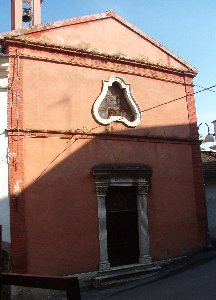
La Chiesa fu progettata, costruita, arredata e sovvenzionata nel 1855 dal sacerdote Don Vincenzo Piccone insieme alla sua famiglia. Mentre Don Vincenzo diceva messa, la famiglia prendeva posto sul balcone, chiuso da una gelosia, che connetteva la Chiesa e l'adiacente casa Piccone. Attualmente la Chiesa è aperta soltanto in alcune occasioni speciali. Clicca sul collegamento qui sopra per vedere alcune foto della Chiesa e la documentazione originale relativa alla sua costruzione. |
|
Church of San Camillo The Church was designed, built, furnished, and funded by the priest Don Vincenzo Piccone and his family in 1855. The family would sit in the balcony, behind a wooden grating, that connected Don Vincenzo's adjoining home to the Church while Don Vincenzo said Mass. It is now open on special occasions. Follow the link above to see more photos and documentation for the building of the church. |
| Pineta "Antonio Porreca"
Un'ampia pineta progettata da Antonio Porreca negli anni ’20, ideale per il riposo, il divertimento dei bambini e per fare dei magici pic-nic. |
|
Pineta - Antonio Porreca (Antonio Porreca Pine Grove Park) A large pine grove designed by Antonio Porreca in the 1920s, ideal for resting, family fun and wonderful picnics. Another article |
|
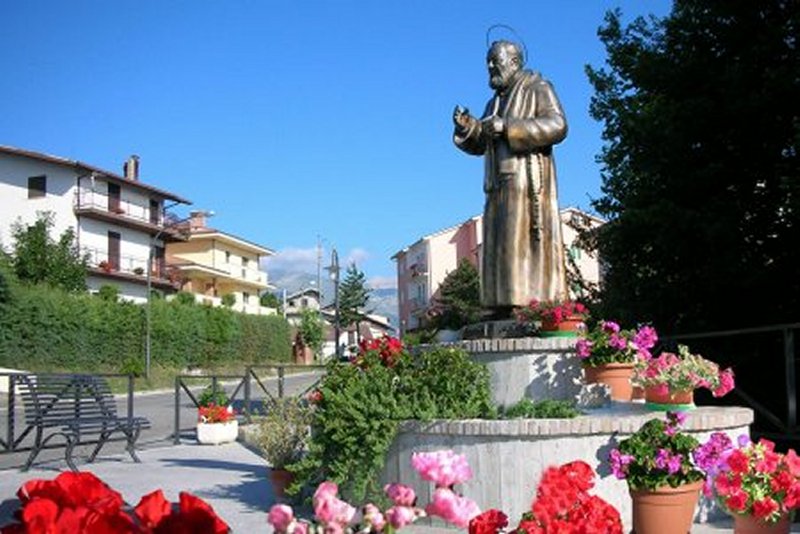
Monumento a Padre Pio |
|
Padre Pio Monument |
|
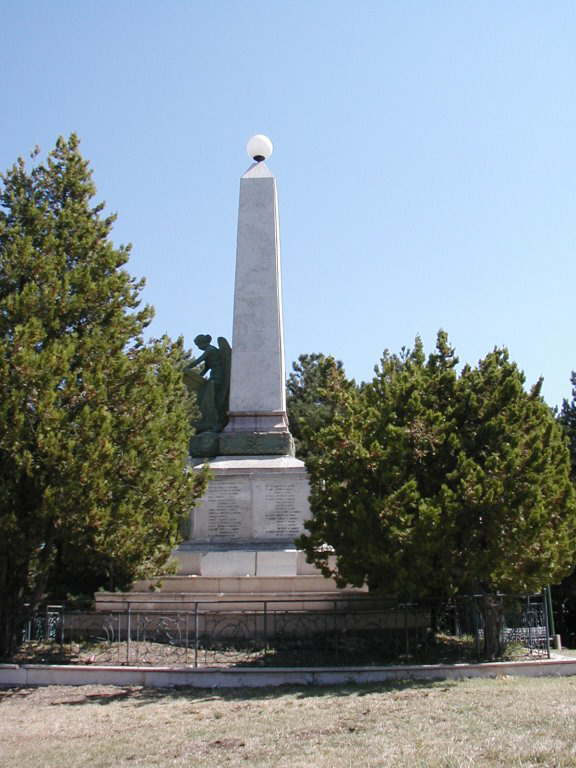
Stele ai Caduti di Tutte le Guerre Si trova al termine di una scalinata all’entrata della Pineta. E’ una stele che s’innalza su un cubo di marmo sormontata da una Vittoria Alata. L’opera è dell’Arch. Lucci di Pennadomo, la recinzione del basamento in ferro battuto venne eseguita su disegno di Nicola Piccone di Torricella. Uno dei primi monumenti eretti in Abruzzo (1922) per ricordare i caduti delle guerre, i 150 morti nella prima guerra mondiale ai quali si aggiunsero poi un centinaio morti in Albania e in Russia durante la seconda guerra mondiale. |
|
Memorial to the Fallen of All Wars Situated at the end of a stairway at the entrance to the Pineta, the pine grove park. It is a stele that rises up from a marble slab topped by the Winged Victory. Architect Lucci of Pennadomo designed
the memorial, and Nicola Piccone of Torricella designed the wrought iron fence work of the base. One of the first monuments erected in Abruzzo (1922) to those who died in wars, 150 who perished in the First World War and about 100 who died in Albania
and Russia during the Second World War. |
|
Torre ai Caduti Civili della Seconda Guerra Mondiale |
|
Tower to the Civilian Victims of World War II Located on the “piazzetta” or little square, the highest point in the town center, behind the Main Church of San Giacamo Apostolo. It memorializes the sacrifice of 103 civilian victims during the German occupation
of the Second World War. Height of 20 meters (66 feet), with a stone base and an artistically designed railing enclosure. |
|
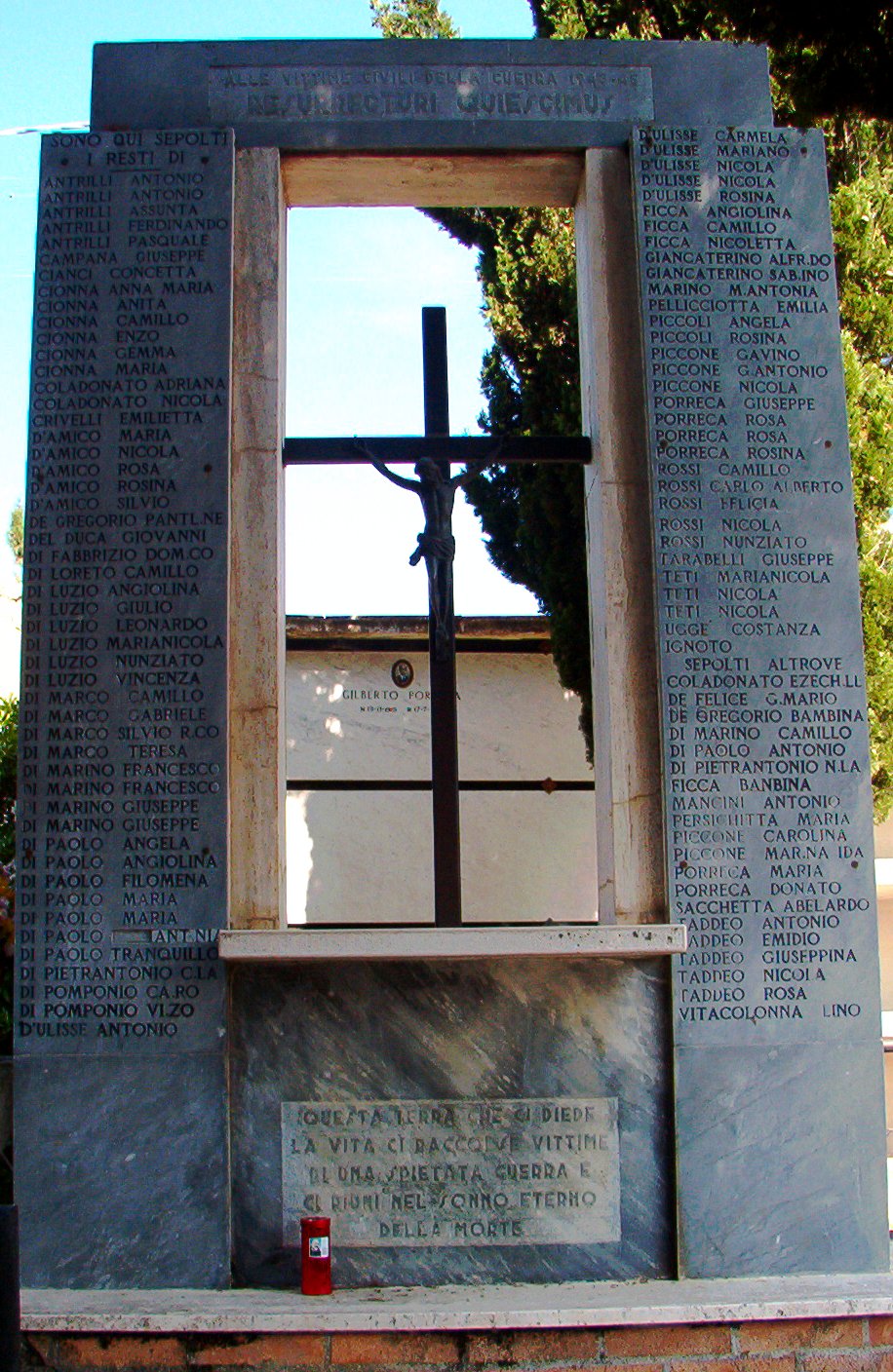
Monumento-Ossario alle Vittime Civili della Guerra 1943-1945 |
|
Memorial and Ossuary for the Civilian War Victims 1943-1945 |
|
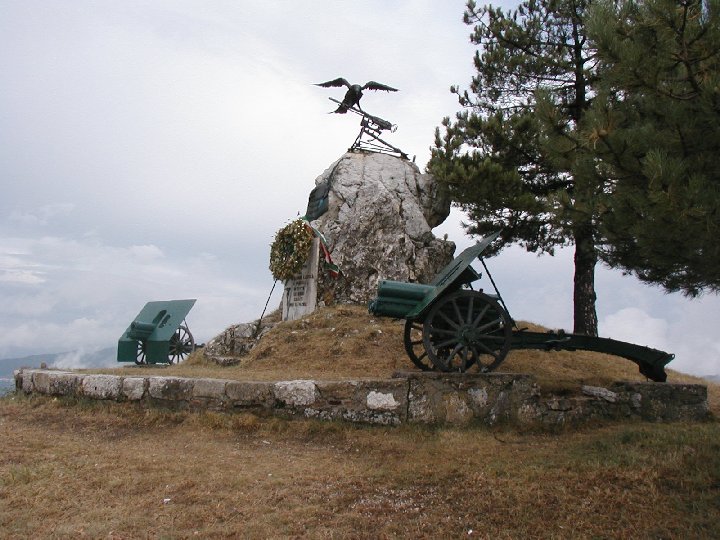
Monumento all’Alpino d’Abruzzo Situato sul Colle dell'Irco a circa due chilometri da Torricella, inaugurato il 14 Ottobre 1967. |
|
Monument to the Alpine Corps of Abruzzo Situated on Colle dell'Irco (Irco Hill), about 2 miles |
|
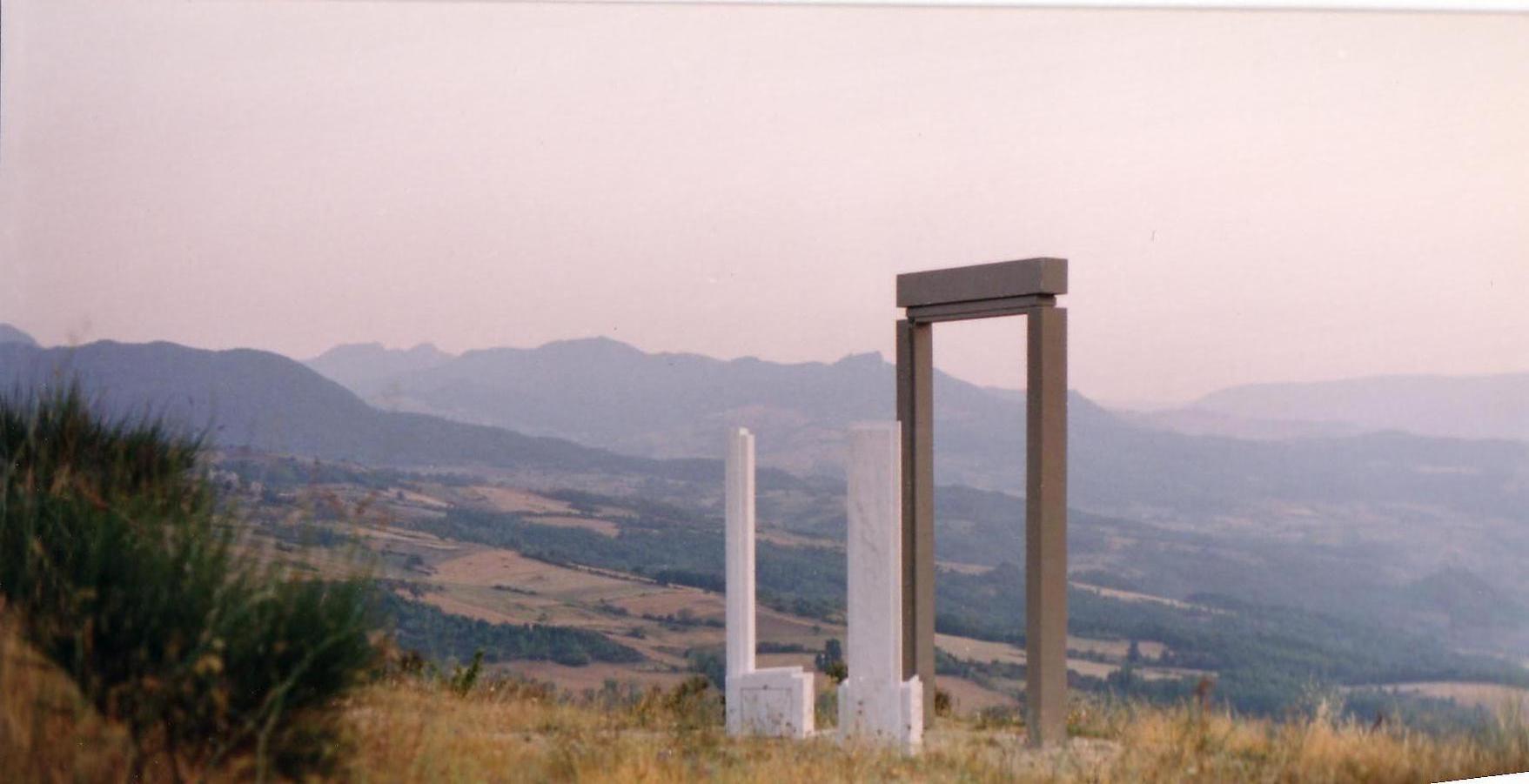
Realizzato nel 1990 dall'Arch. De Biasi. Si trova nel quartiere S. Antonio, in un'area dietro il Poliambulatorio. E' costituito da due sedie stilizzate in marmo bianco di Carrara che guardano una porta in marmo grigio. Essa si apre verso la maestosità della Majella che rappresenta il nostro incontaminato ambiente. Molto suggestivo sedersi sulle sedie la mattina presto ed al tramonto con il sole che scompare dietro Monte Amaro. |
|
Created in 1990 by Architect De Biasi. Situated in the San Antonio neighborhood, the area behind the medical clinic. Composed of two stylized seats in white Carrara marble that face a doorway in grey marble. It opens towards the majestic Maiella and represents our uncontaminated environment. It is very suggestive to sit on the seats in the early morning and at sunset with the sun disappearing behind Mount Amaro. |
|
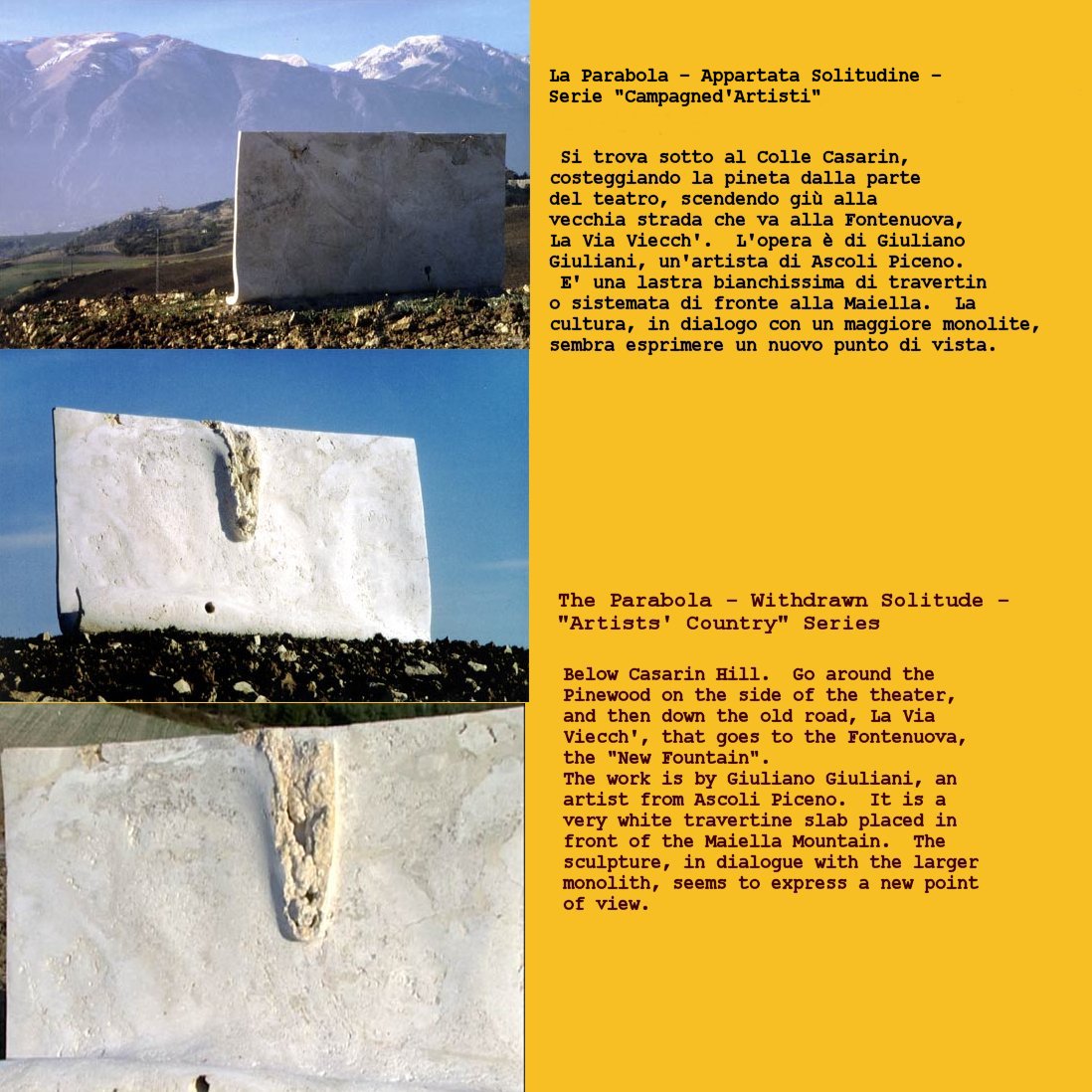
La Parabola - Appartata Solitudine - Serie "Campagne d'Artisti" |
 click for larger image/cliccate qui |
The Parabola - Withdrawn Solitude - "Artists' Country" Series |
|
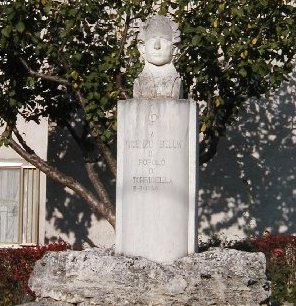
Statua di Vincenzo Bellini Vincenzo Bellini Senior nacque a Torricella Peligna da Rosario e da Francesca Mancini. E' importante notare che, da San Vincenzo Ferreri, santo venerato dai torricellani, derivó il suo nome Vincenzo Bellini di Torricella Peligna. Musicista vissuto nel secolo XVIII, apprezzato per gli oratorii sacri e le messe patronali, trasmise la sua passione per la musica al suo glorioso nipote Vincenzo Bellini, genio musicale di fama universale, nato a Catania il 3 di novembre 1801 e morto a Puteaux, presso Parigi, il 23 settembre 1835. |
|
Vincenzo Bellini Statue Vincenzo Bellini Senior was born in Torricella Peligna to Rosario Bellini and Francesca Mancini. It is important to note that the name Vincenzo derives from a saint venerated by Torricellans, San Vincenzo Ferreri (Saint Vincent Ferreri). Vincenzo Bellini Senior was a musician who lived in the 18th century and was known for his oratorios (compositions for voices and orchestra, telling a sacred story) and patronal masses. He transmitted his passion for music to his glorious grandson, Vincenzo Bellini, the musical genius of universal renown, who was born in Catania on November 3, 1801, and died in Puteaux, near Paris, on September 23, 1835. |
|
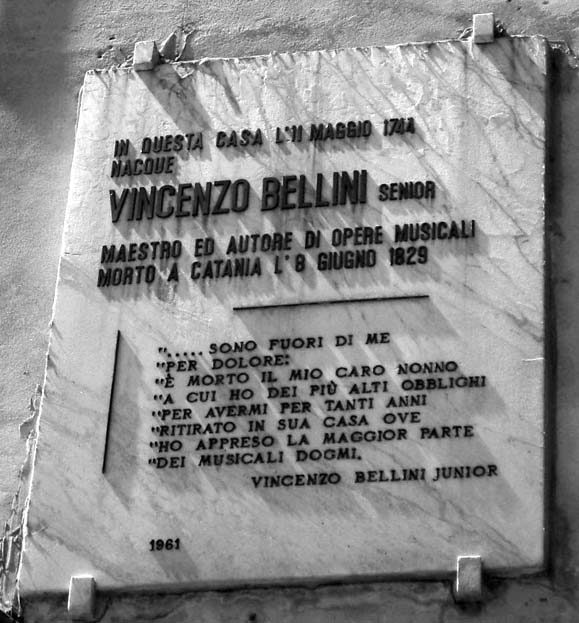
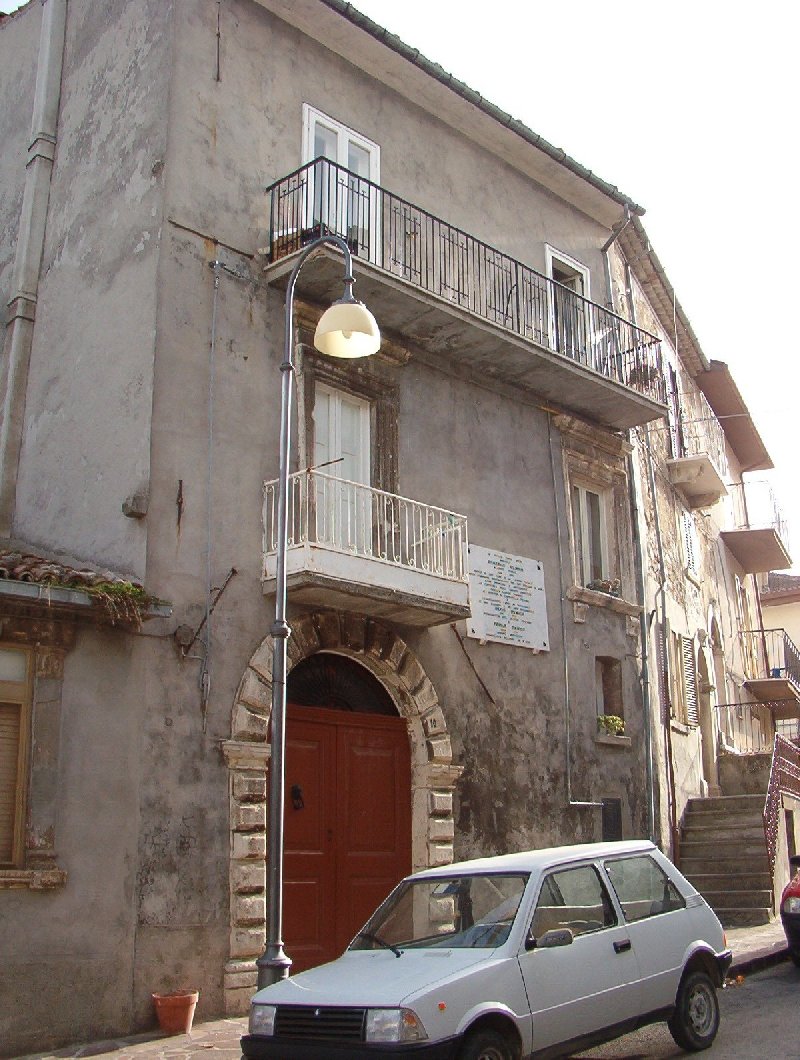
Casa Natale di Vincenzo Bellini, Senior In questa casa l’11 maggio 1744 nacque Vincenzo Bellini Senior, maestro ed autore di opere musicali morto a Catania l’8 giugno 1829. La casa si trova su Corso Umberto I vicino alla Chiesa di San Giacomo Apostolo e la farmacia. “Sono fuori di me per dolore. E’ morto il mio caro nonno a cui ho dei più alti obblighi per avermi per tanti anni ritirato in sua casa ove ho appreso la maggior parte dei musicali dogmi.” Vincenzo Bellini, Junior |
|
Birth Home of Vincenzo Bellini, Senior Vincenzo Bellini Senior, teacher and author of musical works, was born in this house on May 11, 1744. He died in Catania, Sicily on June 8, 1829. The house is on Corso Umberto I near the Church of San Giacomo Apostolo
and the pharmacy. “I am swept away with pain. My dear grandfather has died. I owe him the utmost gratitude. For many years he had me retreat to his house where I learned most of my musical principles.” Vincenzo Bellini, Junior |
|
Casa Avita della Famiglia D’Amico In questa casa avita su Via Roma e vicino alla Chiesa di San Giacamo nacque Domenico D’Amico (1819-1901), maestro d’arte. Lasciò numerose testimonianze del suo operare in Roma dove promosse e incoraggiò la presenza degli artisti abruzzesi. In 1991 il Comune di Torricella Peligna e l’Associazione Amici di Torricella posero una lapide in suo ricordo e dei suoi discendenti, Silvio D’Amico (1887-1955), rinnovatore del teatro italiano e fondatore dell’Accademia d’Arte Drammatica di Roma, e Fedele D’Amico (1912-1990), insigne musicologo e marito della famosa sceneggiatrice, Suso Cechi D’Amico. |
|
D’Amico Ancestral Home The art master Domenico D’Amico (1819-1901) was born in this ancestral home on Via Roma near the Church of San Giacomo Apostolo. Many of his masterpieces remain in Rome, where he fostered and encouraged the presence of Abruzzese artists. In 1991 the Comune of Torricella Peligna and the Association Amici di Torricella placed a plaque in his memory and in memory of his son, Silvio D’Amico (1887-1955), modernizer of Italian theater and founder of the Academy of Dramatic Arts in Rome, and his grandson, Fedele D’Amico (1912-1990), distinguished musicologist and husband of the famous Italian screenwriter, Suso Cecchi D’Amico. |
|
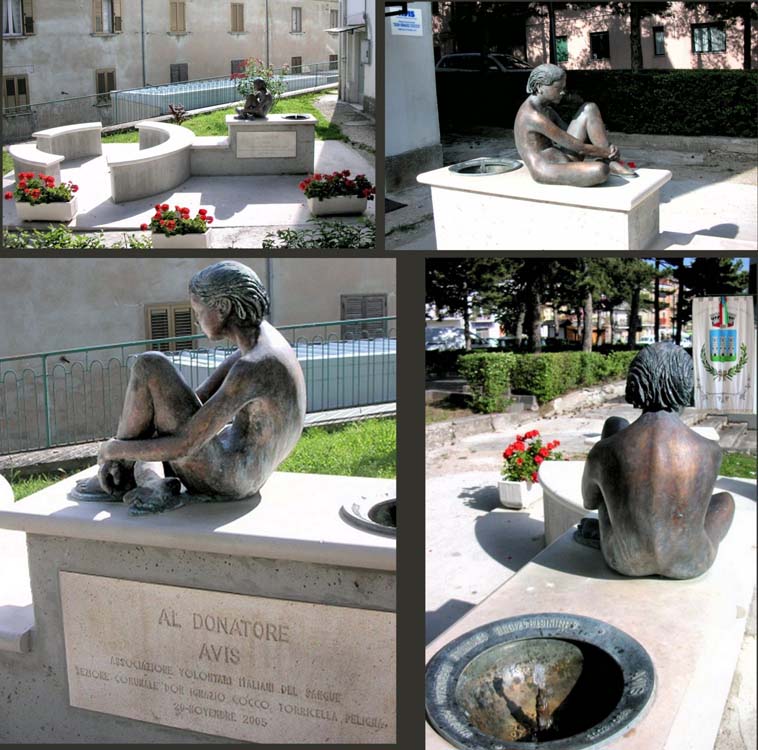
Il monumento dell’AVIS (Associazione Volontari Italiani Sangue) Il 20 di novembre 2005 è stato inaugurato il monumento, Si trova accanto al Municipio nell’area dove c’era un giardinetto con la fontanella. Il progetto è stato ideato da Elio Garis, un artista di Cuneo, sposato con Rita Carapella di Torricella. Lui ha forgiato una statua in bronzo, il corpo centrale del monumento. La statua raffigura una ragazza che metaforicamente è la vita, quella che il donatore di sangue dona agli altri. Sul fianco del monumento c’è una scritta che ricorda Don Ignazio Cocco, il fondatore della sezione. La sezione Avis è sicuramente un vanto per Torricella. Un paese con così pochi abitanti conta innumerevoli donatori. |
|
The AVIS (Italian Association of Blood Volunteers) Monument On November 20th 2005 the monument was inaugurated. It is next to the Town Hall. The project was thought up by Elio Garis, an artist from Cuneo, who is married to Rita Carapella from Torricella. He forged a statue in bronze, the focal point of the monument. The statue depicts a girl who metaphorically is life, that which the blood donor gives to others. On one side of the monument there is some writing that recalls Don Ignazio Cocco, the founder of the section. The AVIS section is certainly something of which Torricella can be proud. A village with so few inhabitants has countless donors. |
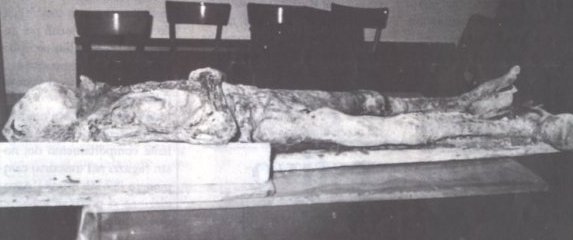
| Museo La cittadina ospita nel Museo territoriale, di recenta appertura, un'interessante raccolta di reperti archeologici rinvenuti nel territorio comunale a ridosso della zona di Juvanum. All'interno del museo è esposta in una teca in vetro climatizzata, una mummia settecentesca venuta alle luce durante i lavori di restauro della chiesa parrocchiale. |
|
Museum The town preserves, in the territorial Museo (museum) recently opened, an interesting collection of archeological objects found in the zone of JUVANUM. In the museum, in a glass case and climatized, is a mummy of the eighteenth century, found under the parish church during restoration work. |
|
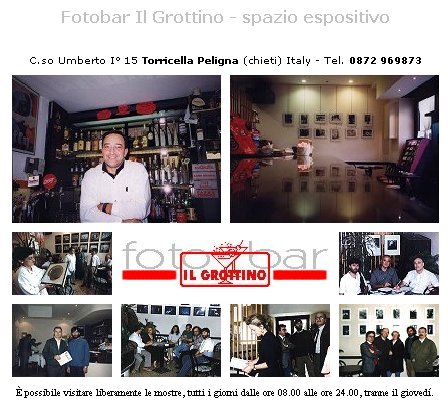
Il Grottino – Mostre fotografiche e Bar Dal 3 ottobre 1992 il Circolo Fotografico CONTROLUCE gestisce lo spazio espositivo FOTOBAR IL GROTTINO proponendo ogni mese una mostra fotografica di autori affermati, aderenti alla F.I.A.F. Federazione Italiana Associazioni Fotografiche: Come riconoscimento per le numerose mostre allestite, la FIAF ha conferito al CIRCOLO la SMF - Stella al Merito Fotografico negli anni 1995, 1997, 1999 e 2003. Don Ignazio Cocco, ex-parocco di Torricella Peligna, era un socio fondatore e si trova delle bellissime foto sue sul sito web del circolo. È possibile visitare liberamente le mostre, tutti i giorni dalle ore 08.00 alle ore 24.00, tranne il giovedí. |
|
Il Grottino - Bar and Photogallery Since 3 October 1992 the Circolo Fotografico Controluce (Photo Club “Back Lighting”) manages a photogallery at the Bar “Il Grottino”, every month displaying the works of an established photographer and member of
FIAF, the Italian Federation of Photographic Associations: In the years 1995, 1997, 1999 and 2003, FIAF conferred upon the club the SMF award, the “Star of Photographic Achievement”, in recognition of the numerous exhibits that the club put on. Father Ignazio Cocco, former parish priest of Torricella Peligna, was one of the founding members, and some of his wonderful photographs can be found on the club’s website.The exhibits are open to the public from 8am to midnight every day of the week except Thursday. |
|
Fontana delle Rose |
 click for larger image/cliccate qui |
Fountain of the Roses The Fountain of the Roses is a simple construction immersed in the countryside 2 kilometers from town behind a shaded ravine. It was constructed in 1862 in accordance with the wishes of the mayor of the time, Camillo
Persichetti. Spring waters are collected in these sorts of public troughs and are used for the hand washing of garments. For the women of Torricella, the Fountain of the Roses was a plentiful source of cool, clear water as well as a place to gather
and discuss the latest occurrences in town. It was a very popular destination, especially in the springtime when women could be seen coming and going on the country road leading to the fountain. They carried baskets on their heads filled with clothes
and linen that had already been cleaned according to tradition with ash, a natural whitener (in dialect, la culate). To get rid of the ash, garments had to be rinsed thoroughly with an abundant amount of clear water, something only the Fountain
of the Roses could offer. Through this process things came out spotlessly white enhanced by the scent of nature. The swashing of the garments in the clear water together with the rustling of thick foliage in the wind fused with the choral singing
of the women to create the most beautiful country melodies. |
|
Fontana Delle Coste Lungo la strada comunale Fontana Delle Coste. La fonte venne realizzata alla fine del XVIII secolo per convogliare le acque sorgive delle Coste, una zona di Torricella Peligna. Presenta decorazioni con cornici classiche e pietre scolpite a rosetta. Il lavatoio fu aggiunto negli anni Trenta del Novecento. |
 click for larger image/cliccate qui |
Fontana delle Coste (Fountain of the Coste) Along the municipal road referred to as Fontana Delle Coste. The fount was built at the end of the 18th century to gather the spring water of the Coste area of Torricella Peligna. It is decorated with classical cornices and rosette sculptured stonework. The washbasin was added in the 1930s. |
|
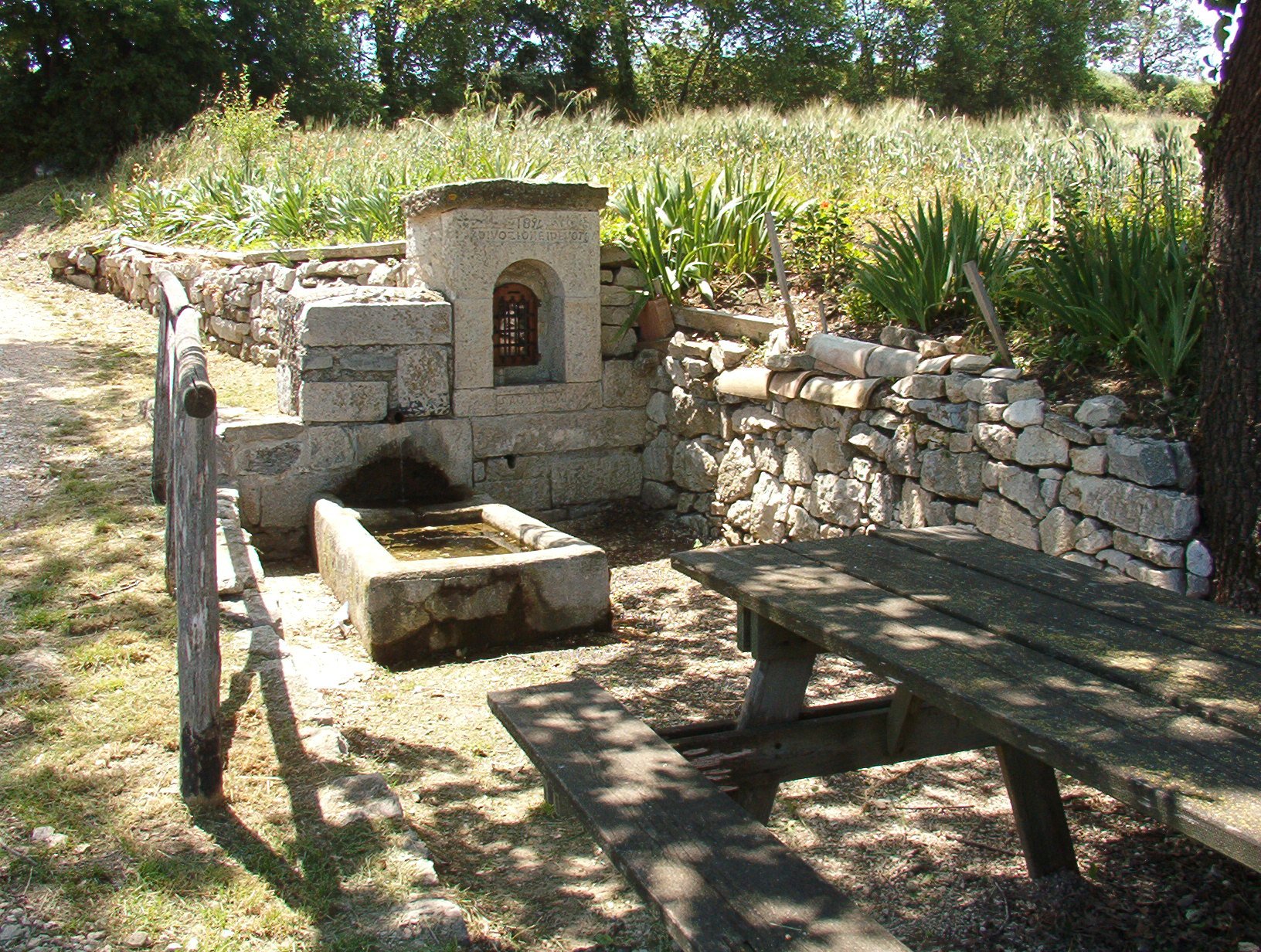
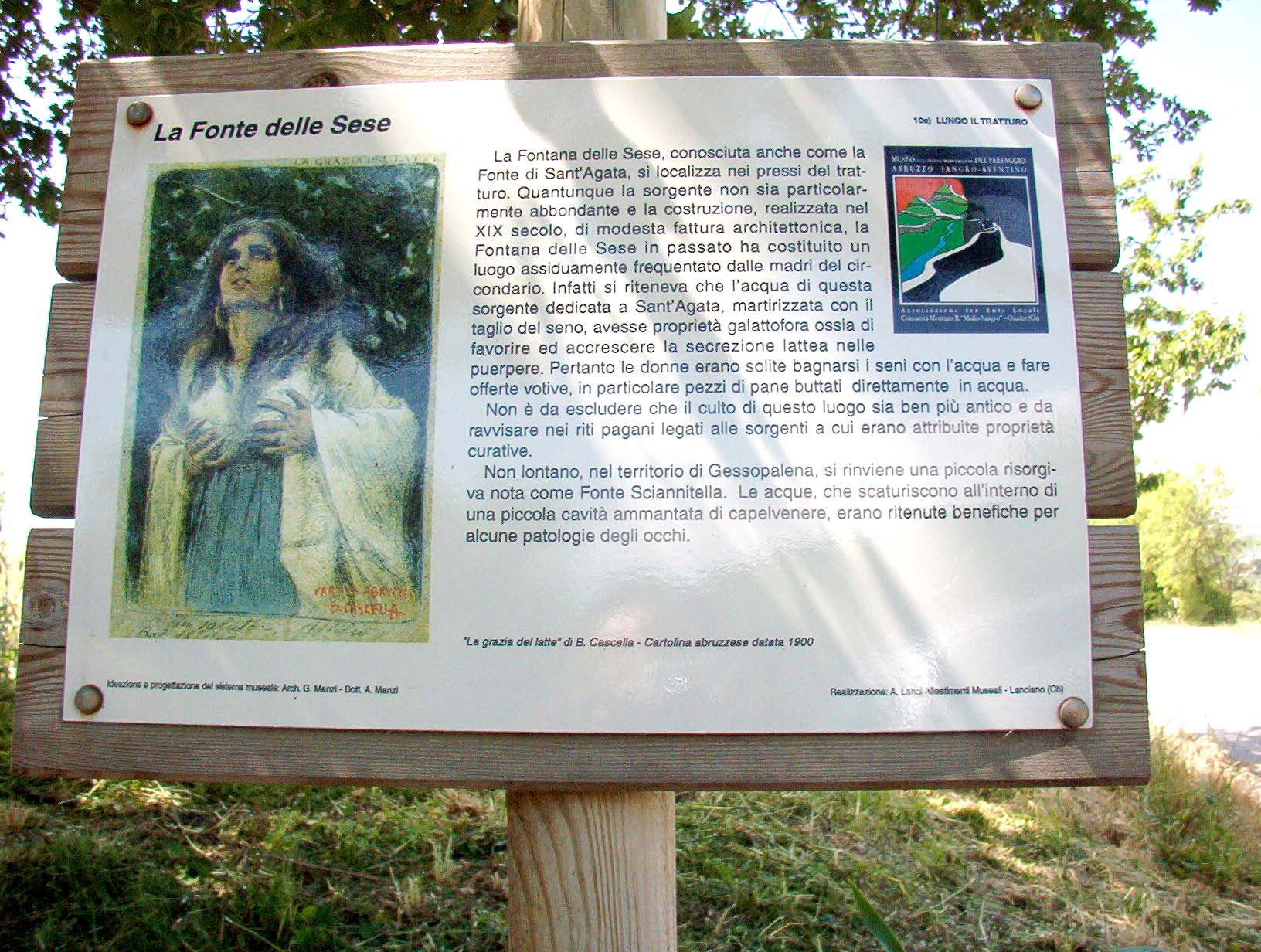
La Fonte delle Sese (Seno) Nei pressi del tratturo e la Chiesa di Sant'Agata a Colle Zingaro. Conosciuta anche come la Fonte di Sant’Agata, che fu martirizzata con il taglio del seno. Quantunque la sorgente non sia particolarmente abbondante e la costruzione, realizzata
nel XIX secolo, di modesta fattura architettonica, la Fontana delle Sese in passato ha costituito un luogo assiduamente frequentato dalle madri del circondario. Si riteneva che l’acqua di questa sorgente avesse proprieta’ galattoforo ossia di favorire
ed accrescere la secrezione lattea nelle puerpere. Pertanto le donne erano solite bagnarsi i seni con l’acqua e fare offerte votive, in particolare pezzi di pane buttati direttamente in acqua. |
|
Fountain of the Sese (Dialect for 'Breasts') In Colle Zingaro near the Church of Sant'Agata and the "tratturo", the trail once used to herd sheep. |
|
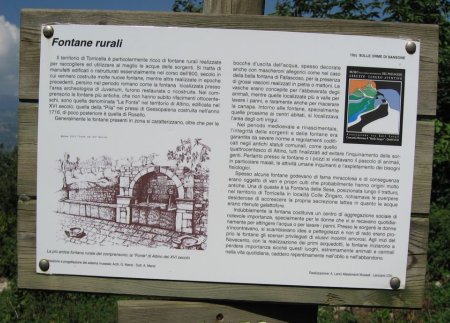
Il territorio di Torricella è particolomente ricco di fontane rurali realizzata per raccogliere ed utilizzare al meglio le acque delle sorgenti. |
|
The territory of Torricella has a particularly large number of rural fountains built to gather and make the best use of water sources.
|
|
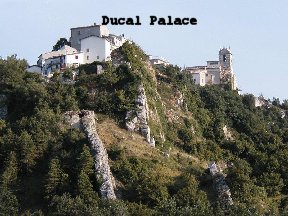
Palazzo Ducale Palazzo fortificato con garitte angolari, nella frazione Fallascoso. |
|
Ducal Palace A palace in the village of Fallascoso fortified with |
|
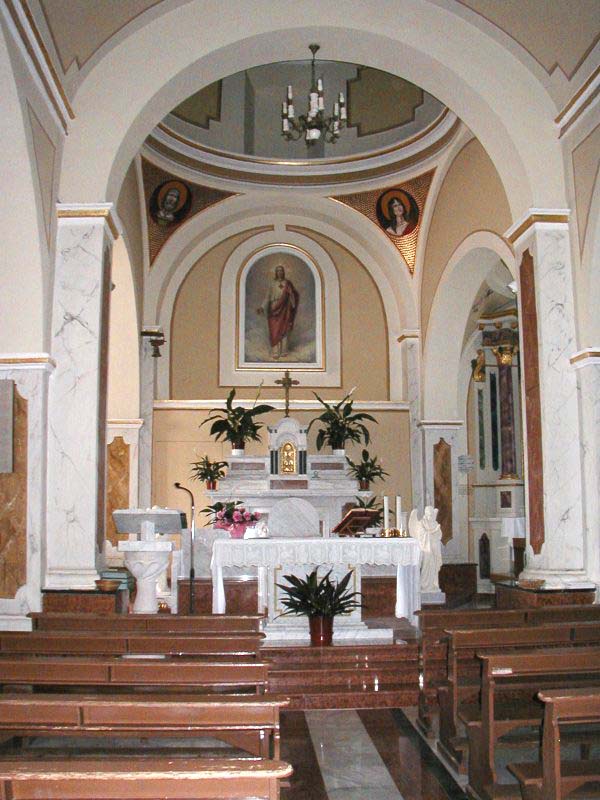
Chiesa di San Nicola di Bari |
 click for larger image/cliccate qui |
Church of San Nicola di Bari |
|
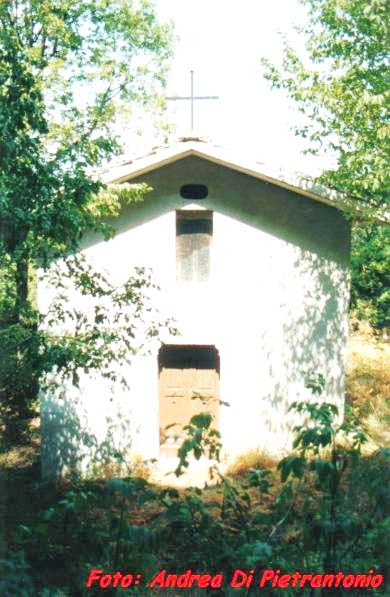
Santuario di San Rinaldo Una piccola cappellina vicino al campo sportivo di Fallascoso di fronte alla “grotta ” (un'apertura nella roccia) in cui si dice abbia vissuto San Rinaldo. Sopra a questa
roccia c'e' anche una piccola campanella come fosse un piccolo campanile della cappellina. Il Santuario era anche un eremo toccato da Pietro da Morrone, l'eremita della Maiella che fu Papa con il nome di Celestino V. |
|
Sanctuary of San Rinaldo A small chapel near the Fallascoso sports field, just opposite the “grotto” (an opening in the rocky cliff) where they say San Rinaldo lived. Above the rocky cliff there is a small bell which appears as if it were a bell tower for the chapel. The Sanctuary was also a hermitage used as a stopover by Pietro da Morrone, the monk from the Maiella that became Pope Celestine V. |
|
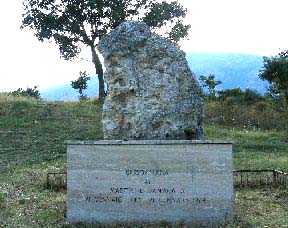
Monumento ai Martiri di Sant’Agata Nel dicembre del 1943 alcuni gruppi famigliari di Torricella Peligna si erano rifugiati nella frazione di Santa Giusta. Dopo qualche scaramuccia con i |
|
Monument to the Martyrs at Sant'Agata In December of 1943 some Torricellan families sought refuge in the hamlet of Santa Giusta. After a few skirmishes with the Germans, the entire group abandoned Santa Giusta and occupied some abandoned farmhouses in Sant'Agata, a hamlet of Gessopalena. On the morning of January 21, 1944, the Germans grabbed them, crowded them together in a room and killed nearly everyone, 43 in all. A 16-year-old girl, Nicoletta Di Luzio, along with her 10-year-old brother, Antonio, survived. |
| Juvanum
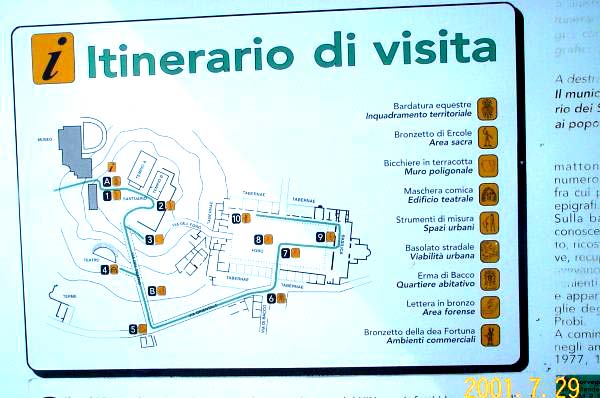
Citta romano sannitica Loc. Montenerodomo, Km 3. |
|
Juvanum
Roman city located in nearby Montenerodomo (3 km). |
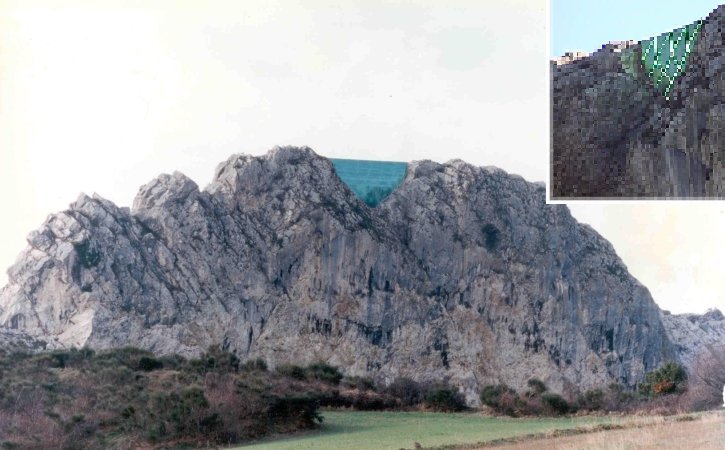
| La Morgia
Maestoso masso calcareo di panoramica bellezza, si erge fra Gessopalena e Torricella Peligna. Ad essa sono legate varie antiche leggende, come quella di Ercole (cristianizzato in Sansone) che vi lasciò l’impronta del proprio ginocchio. E’ stata deturpata dopo l’ultima guerra in conseguenza dell’attività estrattiva di una cava. Nel 1997 questa “ferita” inferta dall’uomo è stata “guarita” da un artista greco, Costas Varotsos con un’opera in vetro alta circa 11 metri e larga 20. |
|
La Morgia
A majestic limestone mass of natural panoramic beauty, which rises between Gessopalena and Torricella Peligna. Several old legends are associated with the Morgia; one says Hercules (Christianized version, Samson) imprinted his knee in it. It was disfigured after WWII by quarry mining. In 1997 this “wound” caused by man was “healed” by a Greek artist, Costas Varotsos, with a glass masterpiece about 11 meters high (36 feet) and 20 meters wide (66 feet). |


|
|
 : Thursday, July 21, 2011 04:36:09 PM -0600